Soups & Stews
Classic Stovetop Beef Stew with Tender Chuck
In this recipe
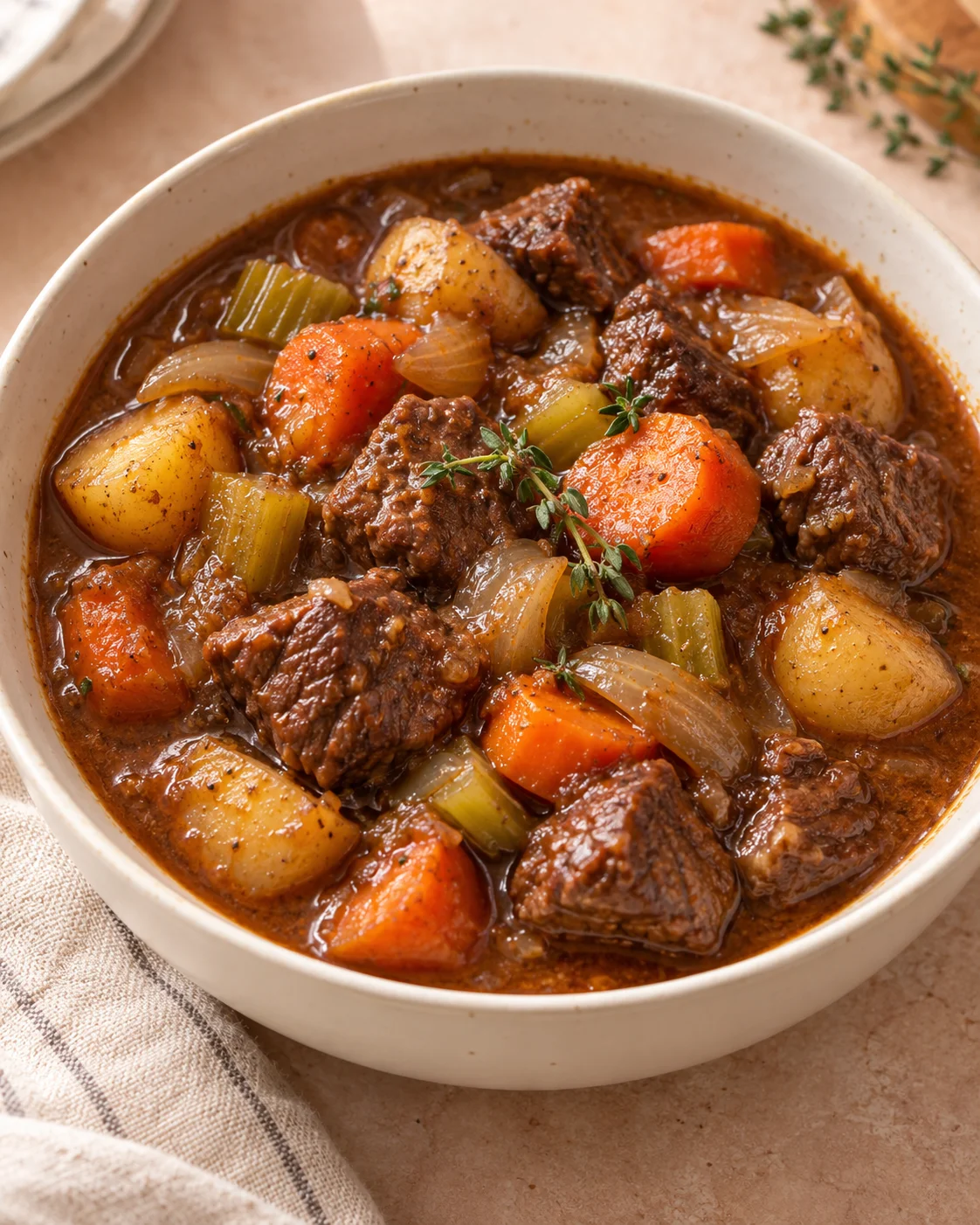
This classic stovetop beef stew is built from simple ingredients, but the finished pot is anything but plain. Chuck beef becomes meltingly tender while the broth, red wine, Worcestershire sauce, tomato paste, herbs, and browned bits on the bottom of the pot develop into a deep, rich sauce. It is hearty, economical, and exactly the kind of dinner that makes a chilly evening feel more manageable.
The stovetop method is straightforward, but it is not a “put everything in the pot and walk away” recipe. The extra attention at the beginning matters: season the beef, brown it in batches, build the sauce in the same pot, and then give the stew time to simmer gently. Serve it over mashed potato, or use crusty bread to mop up the last of the gravy.
This recipe makes 6 servings. Allow 15 minutes for prep, about 2 hours 40 minutes for cooking, and about 2 hours 55 minutes from start to finish. The cooking time includes browning, building the sauce, the 1 hour 45 minute covered simmer, and the 30 minute uncovered reduction, so the times add up clearly. The main method is stovetop-focused, with a clearly labeled oven option and guidance for using a slow cooker, pressure cooker, or Instant Pot when convenience matters more than using this exact stovetop method.
Why You Will Love This Classic Stovetop Beef Stew
A well-made beef stew is a small lesson in patience that pays off at the table. The ingredient list is familiar, the steps are manageable, and the pot does most of the long work. What makes the result special is the order: browning creates savory fond, the vegetables soften in the beef drippings, flour helps thicken the liquid, and the covered simmer gives the chuck time to become tender before the uncovered finish concentrates the sauce.
Chuck is the first choice here because it is nicely marbled and reliably juicy and succulent after slow cooking. It starts as a tough cut, but the long, gentle cook changes its texture. Cutting one large piece into generously sized pieces also helps the beef hold together instead of cooking too quickly and falling apart before the sauce is ready.
The finished sauce should be rich but not pasty: after the lid comes off, it reduces to something like a thin gravy. The stew is lovely on the day it is made, and it is even better the next day as the flavors develop. That makes it a useful make-ahead meal as well as a satisfying Sunday dinner.
Ingredients for Classic Stovetop Beef Stew
Gather everything before you start browning. Once the pot is hot, the early steps move quickly, and having the vegetables, flour, broth, wine, and seasonings ready keeps the fond from sitting in an empty pan.
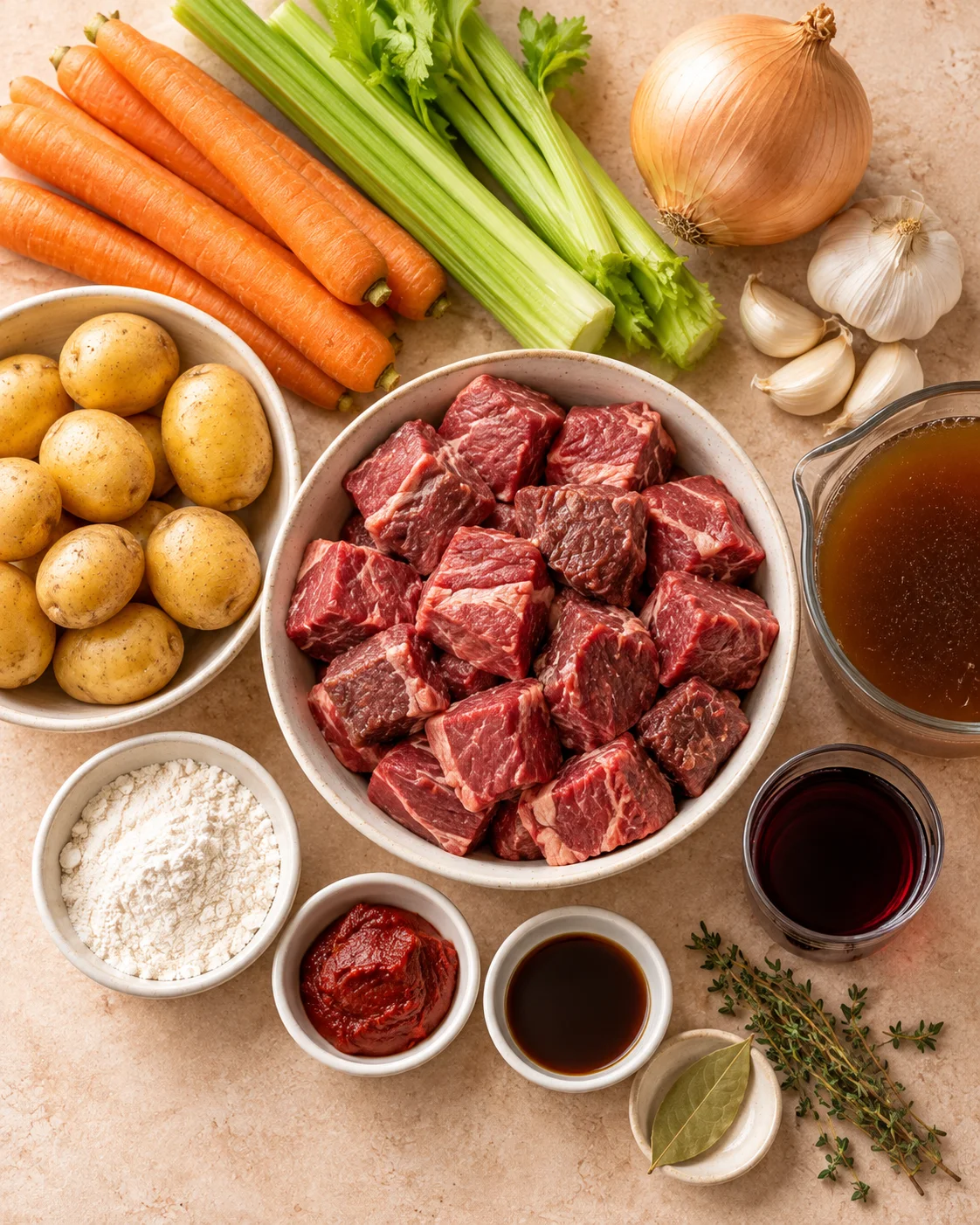
- 1.2 kg / 2.4 lb chuck beef, cut into 3.5 cm / 1.5-inch cubes. Start with about 1.4 kg / 2.8 lb if you are trimming large chunks of fat; you should end up with about 1.25 kg.
- 1 tsp cooking salt / kosher salt, with the listed amount halved for table salt and increased by 50% for flakes.
- 1/2 tsp black pepper.
- 3 tbsp olive oil, divided. You will use it for browning the beef and sautéing the vegetables, adding more only if needed.
- 1 large onion, halved and cut into 1 cm / 2/5-inch slices.
- 4 garlic cloves, minced.
- 3 carrots, cut into 2.5 cm / 1-inch pieces on the diagonal.
- 2 celery stalks, cut into 2.5 cm / 1-inch pieces.
- 1/3 cup plain flour / all-purpose flour. This thickens the sauce as it cooks.
- 3 cups beef broth / stock, salt reduced.
- 2 cups red wine, bold and dry, such as Cabernet Sauvignon, Burgundy, or Merlot. Shiraz is also fine.
- 2 tbsp Worcestershire sauce. It brings savoriness and depth.
- 2 tbsp tomato paste. Tomato paste helps thicken the sauce and adds a little acidity to balance the richness.
- 2 bay leaves, fresh or dried.
- 4 sprigs thyme.
- 400 g / 14 oz baby potatoes, halved.
- More salt and pepper, if required, for the final seasoning check.
For serving
- Mashed potato.
- Finely chopped parsley, to taste as an optional garnish.
- Crusty bread for bowl mopping and dunking.
For the beef, buy one large, well-marbled piece of chuck and cut it yourself when possible. Pre-cut stew beef is often too small for this long cook. Very thick-cut chuck steaks from a grocery store or butcher can work too, provided they are thick enough to cut into large stew-size pieces.
How to Make Classic Stovetop Beef Stew
The sequence below is the full stovetop method. Keep the heat high only for the initial browning, then lower it for the vegetables and the long simmer. The goal is a very gentle simmer, not a hard boil.
- Season the beef. Sprinkle the chuck beef with salt and pepper. Make sure the pieces are ready to go before the pot heats, because you will brown them in batches.
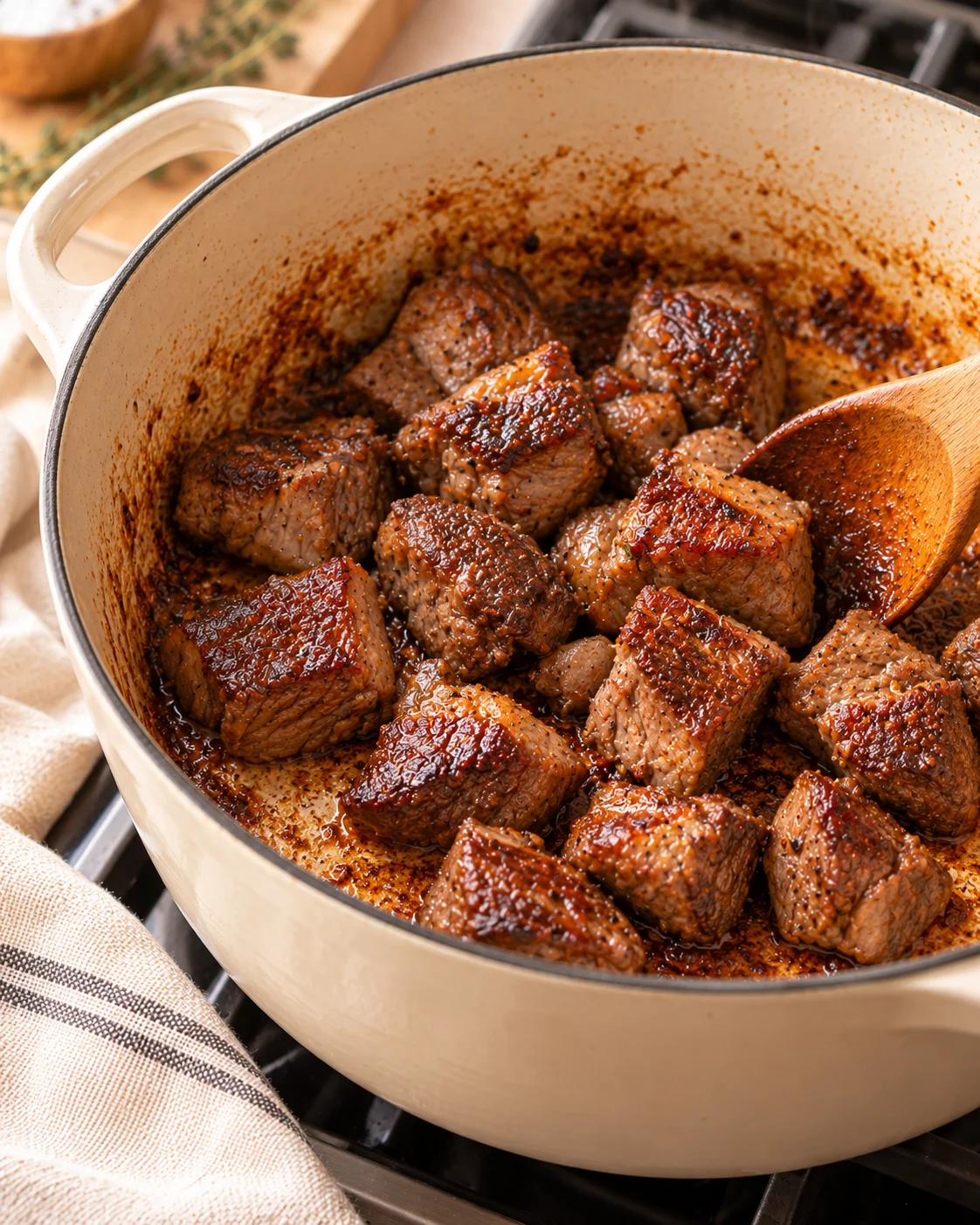
- Brown the beef in batches. Heat 1 1/2 tbsp oil in a large, heavy-based casserole pot over high heat until it is just starting to smoke. Add 1/3 of the beef and brown aggressively on all sides, about 4 minutes. Transfer it to a bowl and repeat with the remaining beef, adding more oil if required. Do not crowd the pot. If you do not use enough oil, the beef will burn instead of brown. The pieces should develop strong color, and the bottom of the pot should collect dark brown fond.
- Sauté the onion, garlic, carrots, and celery. Turn the heat down to medium-high. Add 1 tbsp oil if required, then add the onion and garlic. Cook for 2 minutes, until the onion is slightly softened and golden at the edges. Add the carrot and celery and stir for 1 minute so the vegetables are coated in the beef drippings and the flavorful fond.
- Make the sauce. Sprinkle the flour evenly across the surface of the vegetables and stir to coat. Add the beef broth, red wine, tomato paste, and Worcestershire sauce. Stir until the flour and tomato paste dissolve into the liquid. Scrape the bottom of the pot as you stir so the fond becomes part of the sauce rather than staying stuck to the pan.
- Return the beef and add the herbs and potatoes. Add the browned beef and any juices from the bowl, followed by the thyme, bay leaves, and halved baby potatoes. Stir. The liquid should almost fully cover everything. If it does not, add a touch of water.
- Simmer covered for 1 hour 45 minutes. Bring the pot to a simmer, then adjust the heat to low or medium-low so it is simmering very gently. Cover and cook for 1 hour 45 minutes, or until the beef is pretty tender. Check it with two forks at 1 1/2 hours. The beef is not finished simply because the timer has passed; it should be approaching fall-apart tenderness before you remove the lid.
- Simmer uncovered for 30 minutes. Remove the lid and simmer for a further 30 minutes, or until the sauce reduces slightly. It should look like a thin gravy, and the beef should now be very tender. If you are using the oven option, follow the separate timing below instead of this stovetop covered-and-uncovered sequence.
- Check the seasoning. Taste the sauce and add more salt if required. The broth, Worcestershire sauce, and reduction all affect the final salt level, so this is the right moment to adjust it.
- Serve. Spoon the stew over creamy mashed potato. Finish with a sprig of fresh thyme for decoration or a sprinkle of parsley. Put crusty bread on the table for dunking into the sauce.
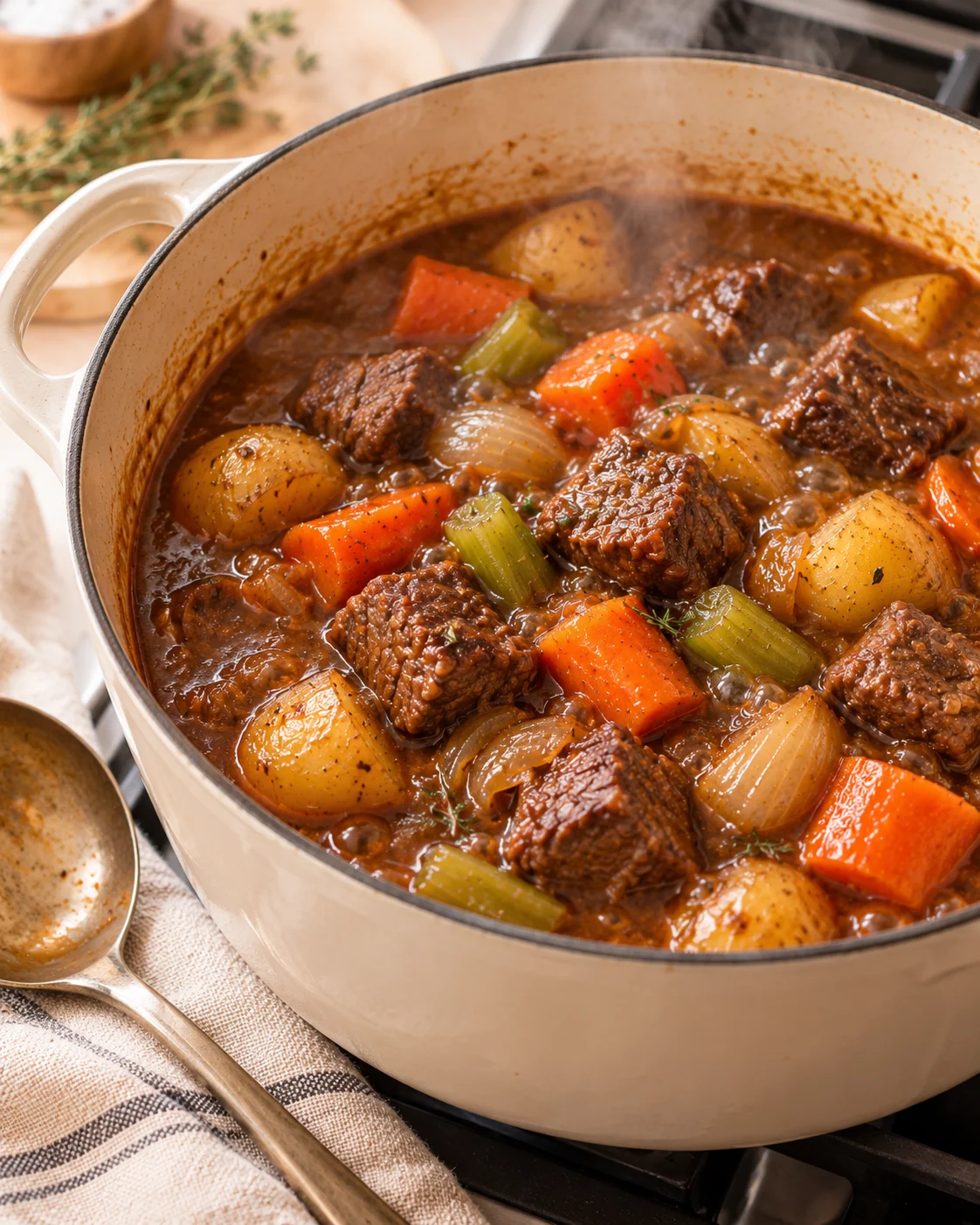
At a glance, the method is: season and brown the beef, remove it, sauté onion and garlic, stir in carrot and celery, add flour, broth, wine, tomato paste, and Worcestershire sauce, then return the beef with the herbs and potatoes. Cook covered for 1 hour 45 minutes, uncover for 30 minutes, check the seasoning, and serve over mashed potato.
Tips for Success
Choose chuck and cut it large
Chuck is a tough, well-marbled cut that needs a slow cook to become tender enough to eat. The marbling helps keep it succulent during the long simmer. Large 3.5 cm / 1.5-inch pieces are important because small pieces can cook too quickly and fall apart during the long cooking time. Generic pre-cut “stew beef” is often both too small and too lean, and the package may not tell you which cut you are getting.
Make the browning count
The more thoroughly the beef browns, the more dark brown fond collects on the bottom of the pot. That fond is concentrated flavor and gives the sauce a deeper color. Brown only 1/3 of the beef at a time rather than cramming all of it into the pot. Overcrowding traps moisture, so the beef steams instead of browning. If the pan looks dry, add more of the divided oil as needed; too little oil can make the beef burn rather than brown.
Do not rush the simmer
After the broth and wine go in, bring the mixture to a simmer and then lower the heat. A very gentle simmer is the texture-setting stage for the chuck. Check the beef with two forks at 1 1/2 hours, then continue until it is nearly fall-apart tender before the final uncovered reduction. Stir gently once the beef is very tender so the pieces stay intact.
Use an affordable, full-bodied red wine
Red wine adds depth to the sauce, but there is no need to use an expensive bottle for a slow-cooked recipe. A good-value bold, dry red such as Cabernet Sauvignon, Burgundy, Merlot, or Shiraz works. Pinot Noir is considered too light for this stew. About 99% of the alcohol in the red wine evaporates during cooking; the sauce does not taste winey because the wine transforms as it cooks. If you cannot consume alcohol, use more beef broth and 2 tsp brown sugar instead.
Watch the final sauce texture
The covered stage cooks the beef and potatoes in the liquid. The uncovered 30-minute stage allows the sauce to reduce and thicken slightly. The finished consistency should be like a thin gravy rather than a stiff paste. If the sauce seems thin at the end, continue the gentle uncovered simmer long enough for it to reduce slightly, keeping the heat controlled so the bottom does not scorch.
Variations and Alternate Cooking Methods
The stovetop version is the main recipe, with several clearly labeled alternatives. Treat these as separate methods rather than transferring the stovetop instructions unchanged.
Oven option
After the sauce, beef, herbs, and potatoes are combined, cover the casserole pot and bake for 2 1/2 hours at 180°C / 350°F, or 160°C fan-forced. The sauce should thicken sufficiently in the oven. If it is still a little thin, put the pot on the stove and simmer gently with the lid off until the sauce thickens a bit. Stir very gently at that point because the meat will be ultra-tender.
Slow cooker, pressure cooker, and Instant Pot options
Yes, the stew can be made in a slow cooker, pressure cooker, or Instant Pot, but this stovetop recipe should not simply be transferred verbatim and expected to produce exactly the same sauce. Those appliances require an altered method so the sauce does not lose the rich flavor created by the stovetop method. For an Instant Pot, the stove steps can be done using the sauté function, but use a method designed for the pressure-cooking stage rather than guessing at a new time here.
Gluten-free thickening
To make the stew gluten-free, replace the flour with a slurry made from 3 tbsp cornflour/cornstarch and 3 tbsp water. Do not add that slurry at the beginning. Stir it into the stew at the very end, once the meat is fall-apart tender, then simmer for a few minutes so the sauce thickens.
Cornflour/cornstarch is preferred here over gluten-free flour because some blends containing a lot of rice flour can occasionally taste grainy. Also check the labels on the Worcestershire sauce and beef stock cubes or stock products; not every brand is gluten-free.
Other proteins
Pork shoulder, lamb shoulder, or goat can work in this style of stew. If you choose one of those proteins, start checking a little earlier to see whether the meat is tender enough. The main chuck timing is the guide for the beef version, not a guarantee for every other protein.
Other beef cuts
Chuck remains the first choice because it is reliably juicy and tender in stews, but the following cuts have different tradeoffs:
- Brisket: It is too lean for this particular stew and is better slow-cooked whole and sliced.
- Gravy beef: This comes from the shin or shank area and is often sold in steak-slice form, which can be too thin to cut into large stew pieces. If you can find large pieces, it can work well. It is a gelatinous cut that becomes tender with slow cooking, although it may take a little longer to become fork-tender.
- Generic “beef casserole” cubes: The cut is often unclear, the pieces are usually too small for this recipe, and they are often not marbled with fat.
- Boneless beef rib: It is too fatty here, and the fat is difficult to scoop from the surface of the stew.
- Beef cheeks: They could work beautifully if kept whole. Cut pieces can twist and buckle during slow cooking, so they do not look as appealing. Keeping them whole would also require a different amount of meat and sauce.
- Bolar blade and oyster blade: These cuts can be slow-cooked, but they are leaner and do not have as much beef flavor, so they are not the preferred choices for this stew.
Storage, Make-Ahead, and Freezing
Beef stew is a good make-ahead meal. It keeps for 4 days in the refrigerator and 3 months in the freezer. Refrigerate or freeze the stew, then thaw it before reheating on the stove or in the microwave.
The flavor is even better the next day because the stew has time to develop. If you are planning ahead, making it a day early is a useful option rather than a compromise. Reheat gently so the sauce warms through without aggressively boiling the tender beef.
If freezing the stew, give it time to thaw before reheating. Once it is warm, taste the sauce again and adjust the seasoning only if required. The mashed potato and bread are serving choices, so prepare or serve them separately from the stored stew.
Serving Suggestions
Mashed potato is the classic partner for this stew, and it is the serving choice highlighted by the recipe. The creamy mash catches the thin gravy and makes the bowl feel especially comforting. A sprig of fresh thyme or a sprinkle of finely chopped parsley adds a simple finish.
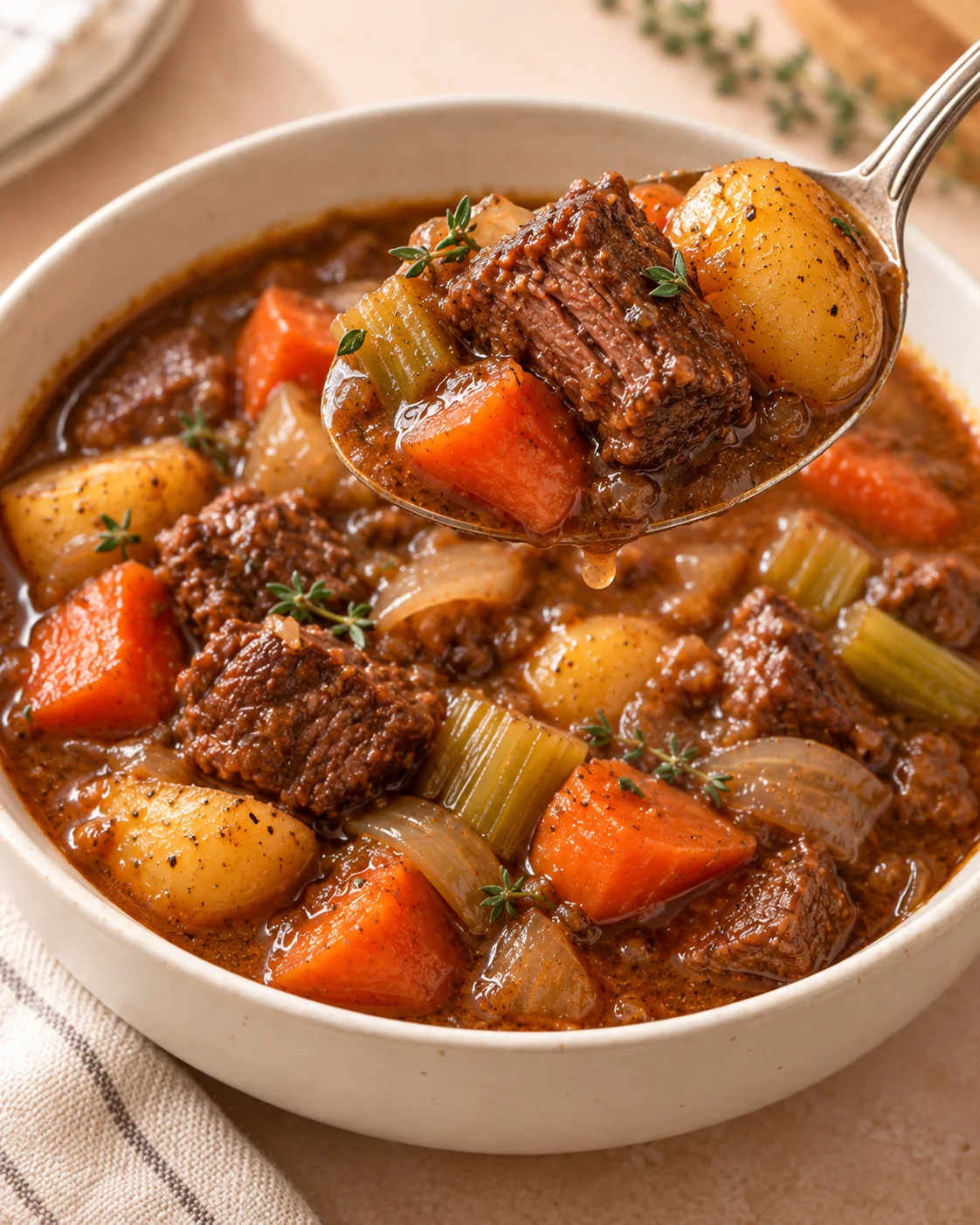
For other options, serve the stew with any of the following:
- Cauliflower mash as a low-carb alternative.
- Mashed sweet potato or other mashed vegetables, including parsnip, pumpkin, or other root vegetables.
- Polenta or rice to hold the sauce.
- Warm, crusty bread for dunking and bowl mopping, including a rustic no-yeast Irish soda bread or a crusty no-knead artisan bread.
Because the sauce is meant to be spoonable and gravy-like, choose a serving base that gives it somewhere to go. There is no need to add a complicated garnish; thyme, parsley, or a piece of crusty bread is enough.
Frequently Asked Questions
Can this beef stew be made in a slow cooker, pressure cooker, or Instant Pot?
Yes. Use the separately designed slow-cooker or pressure-cooker version for those appliances because the recipe is altered to suit their cooking conditions and to protect the sauce flavor. For an Instant Pot, the stovetop steps can be completed with the sauté function before moving to the pressure-cooking method.
Can I make this stew gluten-free?
Yes. Replace the flour with 3 tbsp cornflour/cornstarch mixed with 3 tbsp water. Stir the slurry into the stew at the very end, after the meat is fall-apart tender, and simmer for a few minutes until the sauce thickens. Check that the Worcestershire sauce and beef stock or stock cubes are gluten-free, since some brands are not.
Can I use pork shoulder, lamb shoulder, or goat instead of beef?
Yes, those proteins can work in this slow-cooked style. Begin checking a little earlier than the beef timing to see whether the meat has become tender enough. The timing here is most specific to chuck beef.
Why is chuck the preferred beef cut?
Chuck is tough enough to benefit from slow cooking and marbled enough to stay juicy and succulent. Cut it yourself into large 3.5 cm / 1.5-inch pieces when possible. Brisket is too lean here, boneless rib is too fatty, generic casserole cubes are usually too small and not marbled, and bolar blade and oyster blade are leaner with less beef flavor. Large pieces of gravy beef can work but may need longer to become fork-tender. Beef cheeks are better kept whole because cut pieces can twist and buckle.
What can I use instead of red wine?
If you cannot consume alcohol, substitute more beef broth and 2 tsp brown sugar. If you do use wine, choose a good-value, bold, dry red such as Cabernet Sauvignon, Burgundy, Merlot, or Shiraz. Pinot Noir is considered too light for this recipe, and an expensive bottle is unnecessary.
How long will leftover beef stew keep?
Keep leftovers for 4 days in the refrigerator or 3 months in the freezer. Thaw before reheating on the stove or in the microwave. The stew often tastes even better the next day because the flavors develop as it rests.
Nutrition Information
The nutrition information supplied for this recipe assumes 6 servings and applies to the stew only, not the mashed potato. Trimming excess fat from the beef is not factored into the calculation.
- Serving: 522 g
- Calories: 605 cal (30%)
Keep exploring
More from the recipe collection

Soups & Stews
Stovetop White Chicken Chili with White Beans
Soups & Stews
Slow-Simmered Smoky Beef Chili
Soups & Stews
Hearty One-Pot Minestrone Soup with Beans and Pasta