Soups & Stews
Hearty One-Pot Minestrone Soup with Beans and Pasta
In this recipe
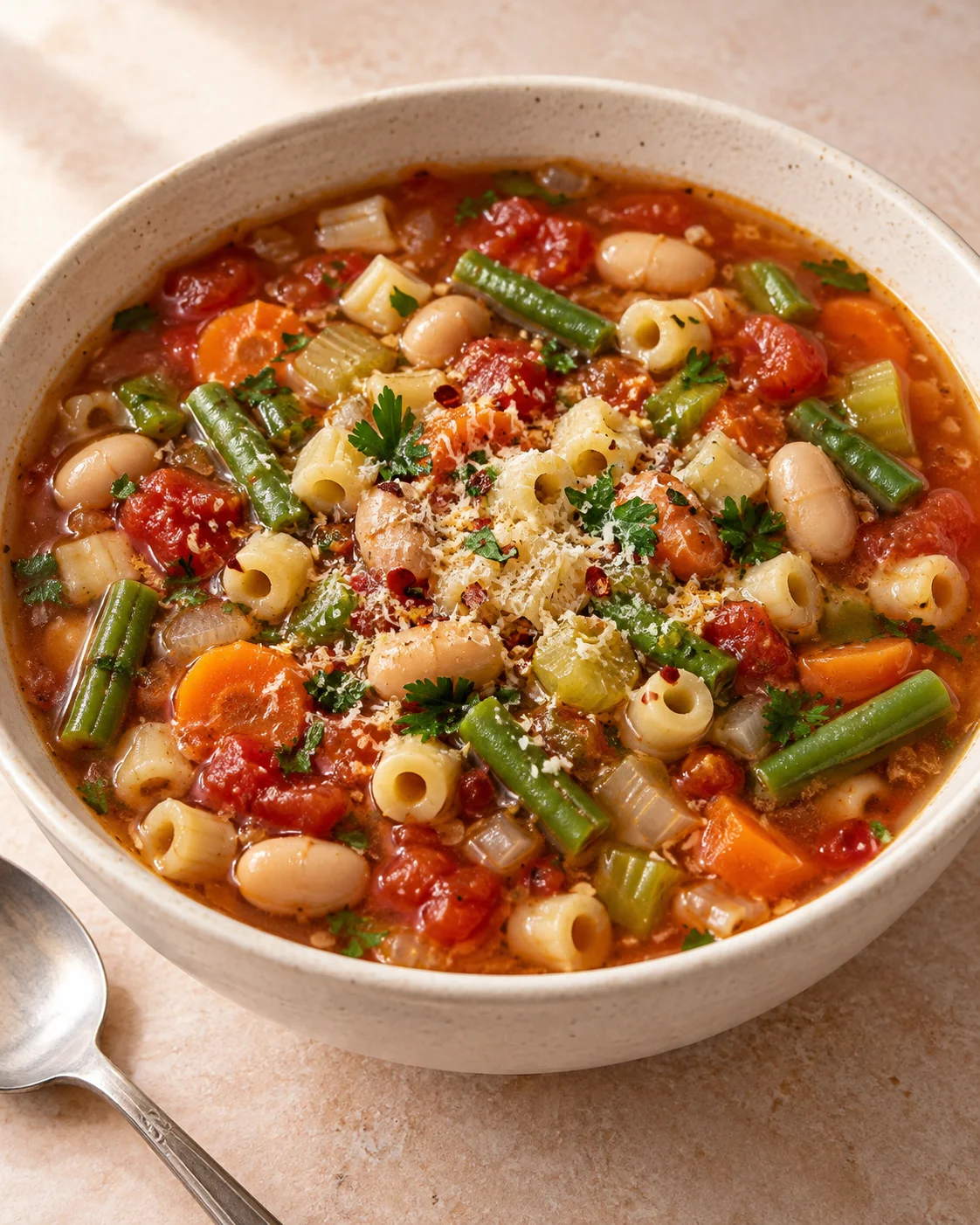
This hearty one-pot minestrone soup is a fresh, satisfying take on the classic Italian vegetable soup. It brings together a tomato-rich broth, tender vegetables, beans, green beans, small pasta, and dried Italian herbs, so you get a substantial bowl without a complicated process. The soup takes 15 minutes to prepare and 30 minutes to cook, and the recipe serves 4 to 6.
Beans and pasta give the broth body while onions, carrots, and celery build a savory aromatic base. Green beans add color and a crisp-tender contrast, and parsley, red pepper flakes, and optional Parmesan finish each bowl with brightness, gentle heat, and savory depth. Serve it with crusty bread for an easy vegetarian meal. If a batch of cookies is already on the counter, dessert is optional but highly recommended.
Among the many soup recipes worth keeping in rotation, this one stands out for its flexible, one-pot approach. It is hearty enough for dinner but still light and fresh, and the ingredient list gives you several source-supported ways to adjust the vegetables, beans, grain, and toppings.
Why You Will Love This Recipe
This minestrone is built in layers, but none of them are fussy. First, the onion, carrot, and celery soften together in olive oil. This combination is an Italian-style aromatic base called a soffritto, and it gives the finished soup depth before the tomatoes or broth go into the pot. Garlic joins after the vegetables have had time to soften, which keeps it fragrant rather than letting it burn.
The beans and pasta make the soup feel hearty, while the tomato broth, green beans, and fresh parsley keep it from becoming heavy. The dried oregano, thyme, and bay leaves work as a simple homemade Italian seasoning blend. Cooking the small pasta directly in the soup also lets it release starch into the broth, giving the liquid a thicker, more cohesive texture.
There is also very little equipment to manage. A large pot is all you need, and a Staub Dutch Oven works well for the simmering soup. Once the vegetables are softened, the remaining ingredients simmer together, and the final seasoning happens right before serving.
Minestrone Soup Ingredients
Gather the ingredients below before you start. The vegetables should be cut as directed so they soften evenly, and the beans should be cooked, drained, and rinsed.
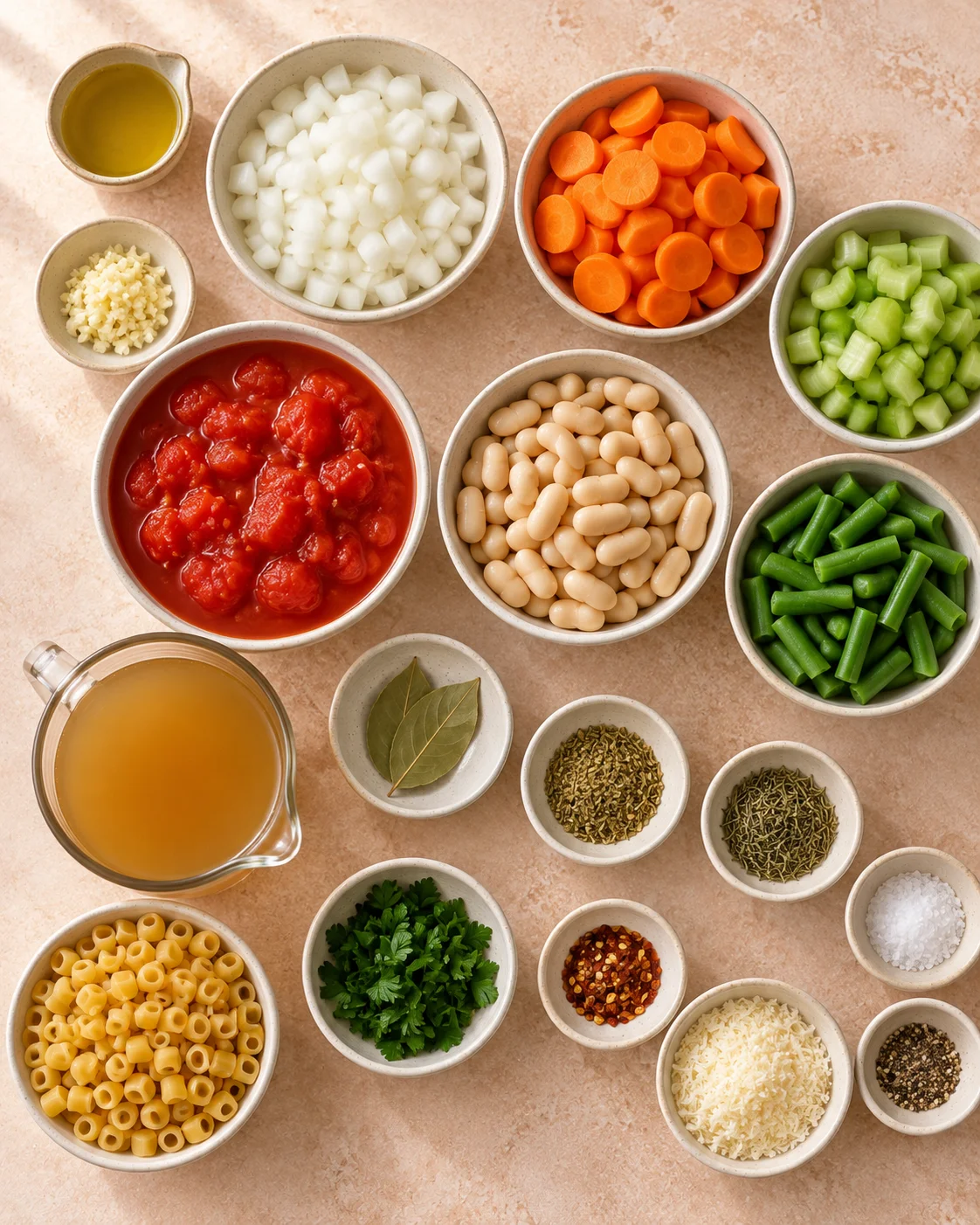
- 2 tablespoons extra-virgin olive oil: Use it to sauté the aromatic vegetables.
- 1 medium yellow onion, diced, 2 medium carrots, chopped, and 2 celery ribs, thinly sliced: Together, these form the soffritto, the flavorful vegetable foundation of the soup.
- 1 teaspoon sea salt, plus more to taste, and freshly ground black pepper: The first amount seasons the vegetables, while the final seasoning is adjusted after cooking.
- 3 garlic cloves, grated: Grating distributes the garlic through the broth, and adding it after the other vegetables have cooked helps keep it from burning.
- 1 (28-ounce) can diced tomatoes: They bring sweet, tangy flavor and the tomato base that defines this version.
- 1½ cups cooked white beans or kidney beans, drained and rinsed: Navy beans, cannellini beans, and red kidney beans all work well.
- 1 cup chopped green beans: These add vibrant color and a crisp-tender texture.
- 4 cups vegetable broth: Store-bought broth works, or you can use homemade vegetable broth.
- 2 bay leaves, 1 teaspoon dried oregano, and 1 teaspoon dried thyme: This trio gives the broth a layered herbal flavor.
- ¾ cup small pasta: Elbows, shells, orecchiette, and ditalini are good shapes to consider. The pasta cooks right in the soup and releases starch into the broth.
- ½ cup chopped fresh parsley: Use it as a fresh garnish. Fresh basil is another excellent herb option.
- Red pepper flakes: Add them at the table or when serving if you want heat.
- Grated Parmesan cheese, optional, for serving: It adds a salty, savory finish, but the soup is also easy to serve without cheese.
How to Make One-Pot Minestrone Soup
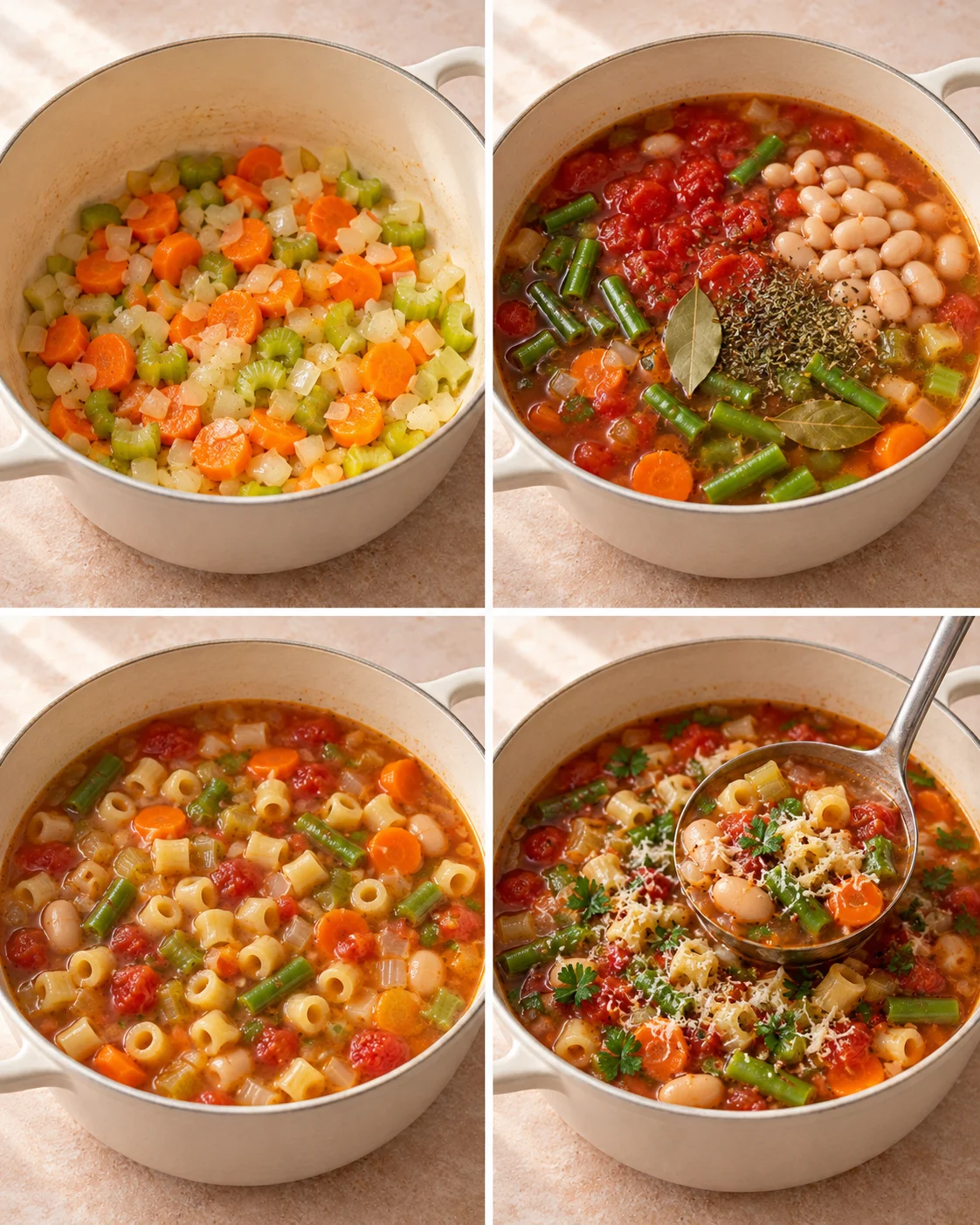
- Soften the aromatics. Heat the oil in a large pot over medium heat. Add the onion, carrots, celery, salt, and several grinds of black pepper. Cook, stirring occasionally, for 8 minutes, until the vegetables begin to soften.
- Build the broth. Add the garlic, tomatoes, beans, green beans, broth, bay leaves, oregano, and thyme. Cover the pot and simmer for 20 minutes. This gives the vegetables time to cook in the seasoned tomato broth and allows the dried herbs to infuse the soup.
- Cook the pasta. Stir in the pasta, then cook uncovered for 10 more minutes, until the pasta is cooked through. Keeping the pot uncovered for this final stage makes it easier to watch the pasta as it finishes.
- Season and serve. Taste the soup and add more salt if needed. Ladle it into bowls and finish with the parsley, red pepper flakes, and Parmesan, if desired.
Tips and Troubleshooting
- Give the vegetables the full 8 minutes. The onion, carrot, and celery do not need to be browned; cook them until they begin to soften, stirring occasionally so the mixture cooks evenly.
- Add the garlic at the right time. Garlic goes in after the first vegetables have cooked. This shortens its exposure to the pan’s direct heat and keeps its flavor from turning bitter or burnt.
- Watch the pasta stage. Small pasta cooks in the hot broth during the final 10 minutes. Test a piece before serving so the texture is cooked through, and remember that the pasta continues to absorb liquid as the soup sits.
- Season twice. The initial teaspoon of salt seasons the vegetables, but the broth and tomatoes can vary in saltiness. Taste at the end and add more salt as needed instead of guessing at the finish.
- Keep the toppings separate when helpful. Parsley, red pepper flakes, and Parmesan can be added to each bowl, which lets everyone adjust the freshness, heat, and salty finish to taste.
- Use the grain variation thoughtfully. If you replace the pasta with pearled farro or barley, remember that those grains do not necessarily cook on the same schedule as small pasta. Use the source-supported grain option, but follow the grain’s own cooking needs rather than assuming the 10-minute pasta timing applies.
Variations and Substitutions
Minestrone is endlessly customizable, and its flexibility makes it useful across the seasons. As Alice Waters writes in The Art of Simple Food, the soup can change with what is in season or what you have on hand. Keep the base method intact, then choose from these specific options:
- Change the aromatic base: Substitute chopped fennel for the celery.
- Switch the green vegetable: Replace the green beans with diced zucchini or yellow squash, or use a mix of all three.
- Use fresh tomatoes in summer: Replace the canned tomatoes with diced fresh Roma tomatoes.
- Add leafy greens: Stir in fresh spinach or kale near the end of the cooking time.
- Replace the pasta: Use a quick-cooking grain such as pearled farro or barley when you do not have pasta.
- Cook the beans yourself: Instead of canned beans, cook your own and use the aromatic cooking liquid in place of some or all of the vegetable broth.
- Make it pasta-free: Skip the pasta and add an extra cup of beans. This is the source-supported way to avoid the pasta absorbing broth.
- Adjust the finish: Fresh basil can stand in for the parsley as a garnish. For a vegan bowl, skip the Parmesan and use vegan pesto instead. Regular pesto is also a good topping if you are not avoiding dairy.
Storage and Make-Ahead
This soup is best right after it is made because the pasta absorbs broth as it sits in leftover soup. For a make-ahead version, cook the pasta separately and stir it into the soup when you are ready to eat. This keeps the pasta from taking up as much of the broth while the soup waits.
Another option is to skip the pasta entirely and add an extra cup of beans. Prepared this way, the soup will keep well for up to four days in the refrigerator. The pasta-free version is especially useful when you want to prepare the soup ahead without losing as much liquid to the pasta.
Serving Suggestions
Top each bowl with chopped parsley, red pepper flakes, and freshly grated Parmesan cheese. The parsley brings a fresh finish, the red pepper flakes add optional heat, and the Parmesan contributes salty, savory flavor. If you are serving the soup as vegan, leave out the cheese or use a scoop of vegan pesto. Regular pesto also makes a flavorful topping.
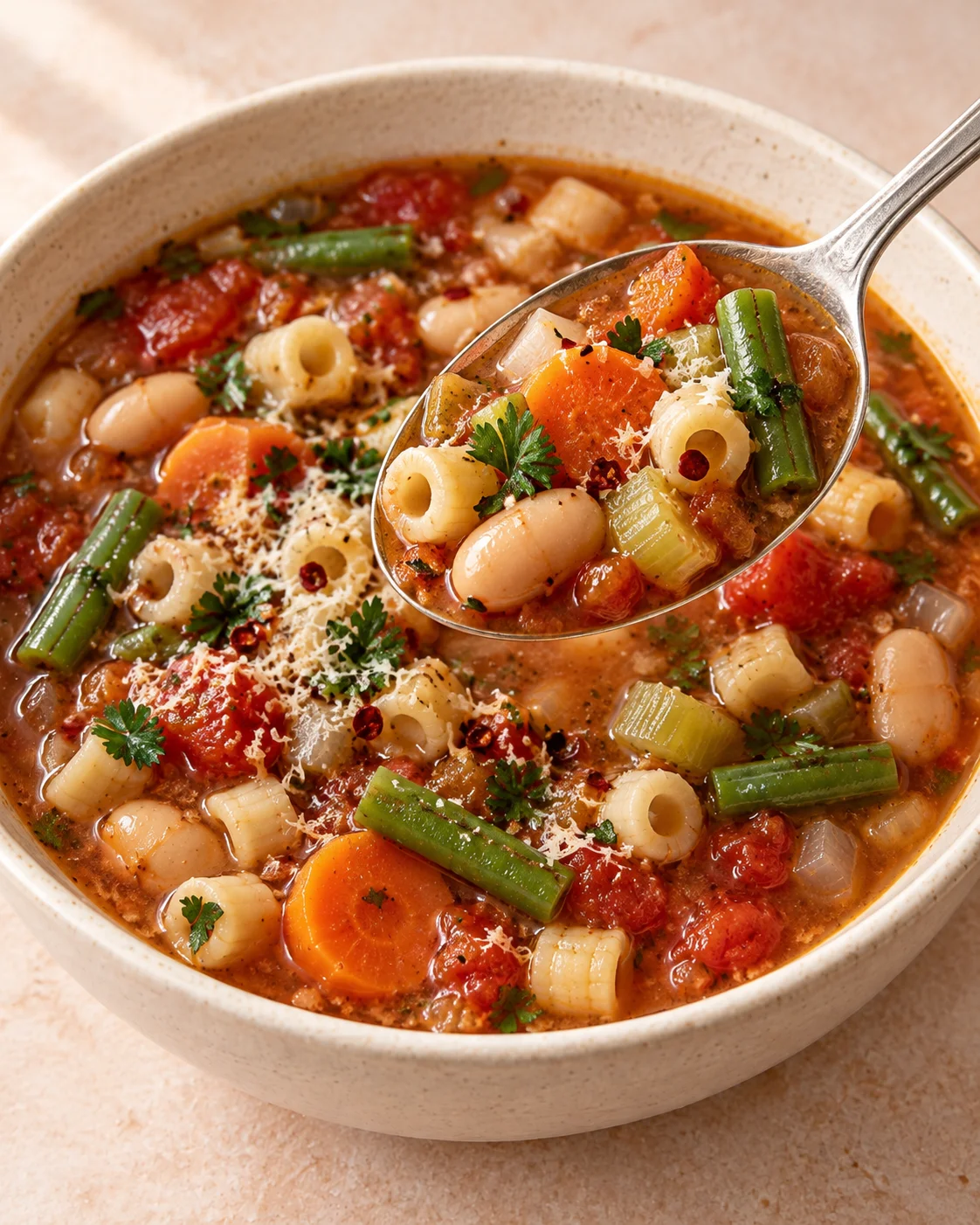
Crusty bread is the simplest partner and turns the soup into a complete vegetarian meal. You can also round out the table with a side salad, such as an arugula salad, beet salad, or pear salad. The combination of a warm bowl of soup and something crisp on the side keeps the meal balanced in texture. And if baking is part of the day’s plan, cookies for dessert are entirely optional—and highly recommended.
Frequently Asked Questions
What kind of beans work in minestrone soup?
Use 1½ cups of cooked white beans or kidney beans, drained and rinsed. Navy beans, cannellini beans, and red kidney beans are all source-supported choices for this recipe.
Why does the pasta make the soup thicker?
The small pasta cooks directly in the broth and releases starch as it cooks. That starch gives the liquid more body. After cooking, the pasta continues to absorb broth, which is why the soup is best right away or with the pasta cooked separately for make-ahead meals.
Can I make this minestrone soup ahead?
Yes. Cook the pasta separately and stir it into the soup when you are ready to eat. You can also leave out the pasta and add an extra cup of beans; that version keeps well for up to four days in the refrigerator.
How can I make the topping vegan?
Skip the optional Parmesan cheese and garnish the soup with vegan pesto instead. Parsley and red pepper flakes are also useful toppings, and neither requires dairy.
What small pasta shapes can I use?
Elbows, little shells, orecchiette, and ditalini all fit the small-pasta role. Whichever shape you choose, cook ¾ cup in the soup uncovered for the final 10 minutes, until it is cooked through.
Can I change the vegetables?
Yes, while keeping the source-supported options in mind. Use fennel for celery, zucchini or yellow squash for the green beans, fresh Roma tomatoes in summer, or spinach or kale near the end. Those changes keep the soup’s flexible minestrone character without changing the basic one-pot method.
Keep exploring
More from the recipe collection
Soups & Stews
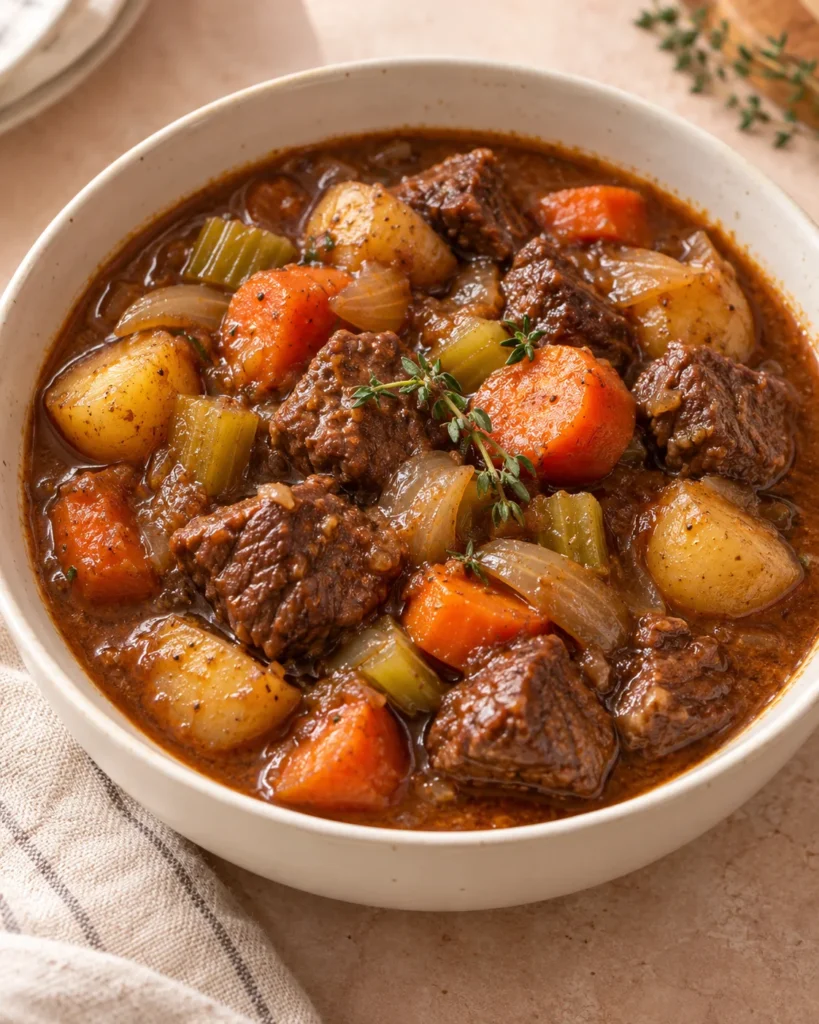
Classic Stovetop Beef Stew with Tender Chuck

Soups & Stews
Stovetop White Chicken Chili with White Beans
Soups & Stews
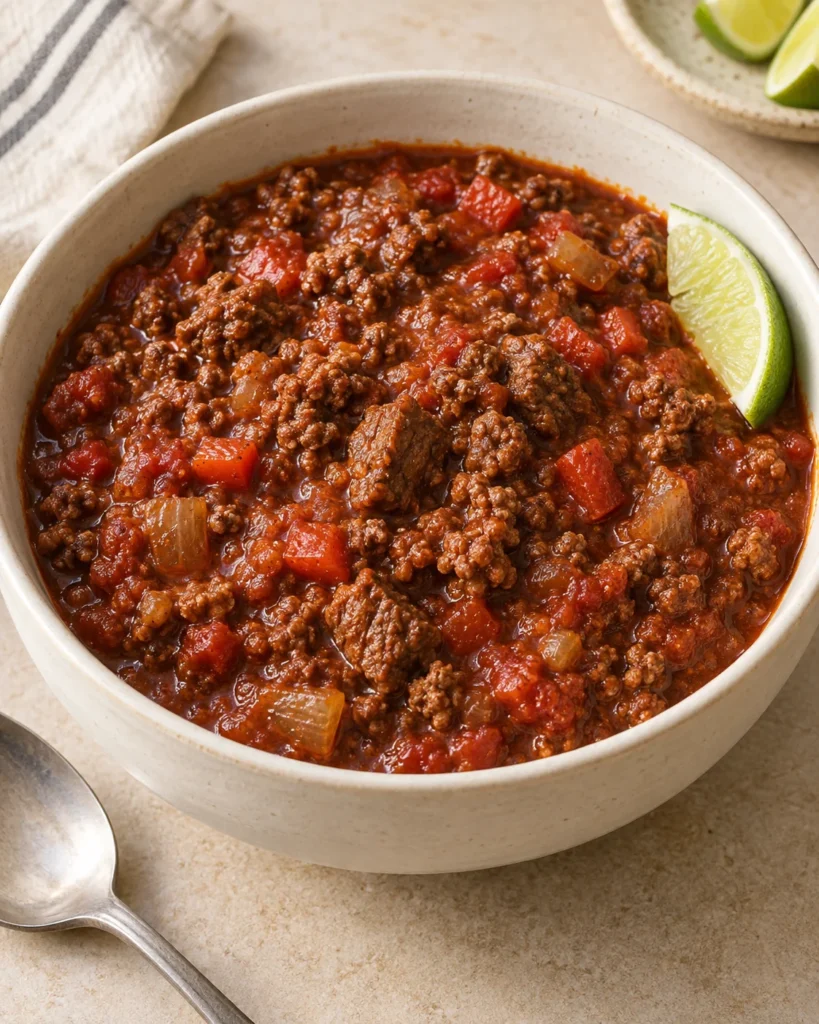
Slow-Simmered Smoky Beef Chili