Soups & Stews
Easy 30-Minute Homemade Chicken Noodle Soup
In this recipe
Introduction
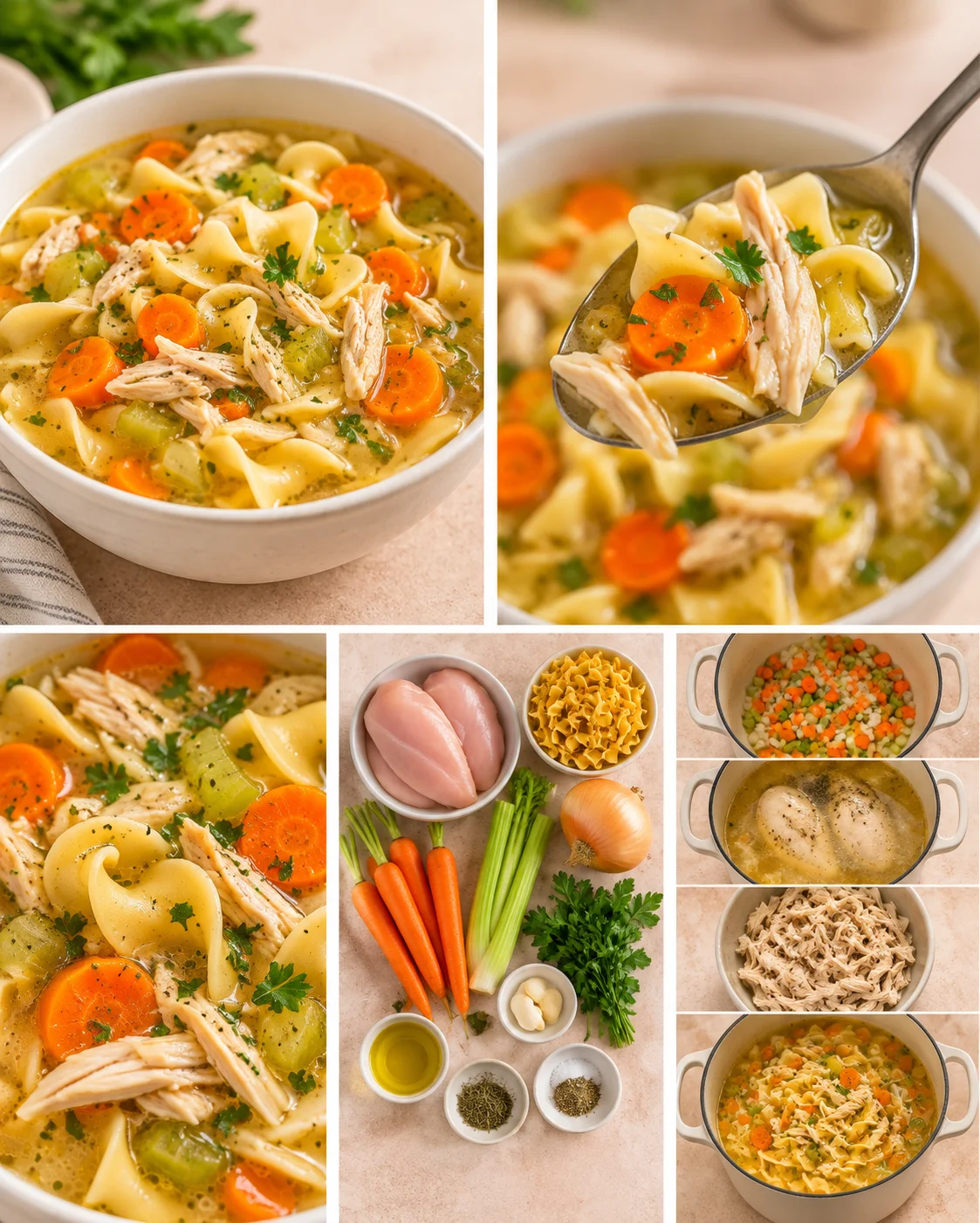
Easy 30-minute homemade chicken noodle soup delivers the classic combination of tender vegetables, savory broth, soft egg noodles, shredded chicken, and fresh herbs without asking you to watch a pot all afternoon. It is made in one pot, uses everyday ingredients, and has the familiar, comforting character people look for in a bowl of chicken noodle soup.
The timing is straightforward: allow 5 minutes for preparation, about 30 minutes for cooking, and 35 minutes total. The recipe makes 6 servings, so it works for a family meal and leaves enough to put away for another day. The finished soup is brothy, hearty, and easy to adjust with extra liquid, salt, pepper, herbs, or a little lemon juice.
Classic chicken noodle soup is often tied to the slow, deeply comforting style associated with homemade family cooking. This version keeps that homey feeling while taking a quicker one-pot route. The vegetables soften first, the broth gains flavor from bay leaves, thyme, and oregano, and the noodles and cooked chicken go in near the end so the meal comes together efficiently.
Why You Will Love This Recipe
This soup is built for the kind of evening when you want something warm and substantial but do not want a complicated project. A large Dutch oven or stockpot holds the vegetables, broth, noodles, and chicken, which keeps the method simple and cuts down on dishes.
- It is ready quickly. The vegetables, noodles, and already-cooked chicken follow a short sequence, so the soup is ready in about 30 minutes.
- It has classic flavor. Carrots, celery, onion, garlic, chicken broth, bay leaves, thyme, oregano, parsley, and black pepper build the familiar savory base.
- The texture is easy to control. Add more broth for a soupier bowl, or keep the original amount for a fuller mix of noodles, vegetables, and chicken.
- It is flexible without losing its character. Wide egg noodles are the traditional choice here, but another pasta can be used. Rotisserie chicken, leftovers, or another cooked chicken option can also fit the method.
- It serves now or later. Six servings make this useful for dinner, and the soup can be refrigerated or frozen for a future meal.
Ingredients and Equipment
Equipment
Use 1 large Dutch oven, large soup pot, or stockpot. A wooden spoon is useful for stirring the noodles and vegetables.
Ingredients
- 2 tablespoons olive oil
- 1 cup carrots, peeled and sliced thin, about 1 1/2 large carrots
- 1 cup celery, sliced thin, about 2 stalks
- 1 cup sweet Vidalia or yellow onion, peeled and diced small, about 1 medium onion
- 2 garlic cloves, minced
- 64 ounces, or 8 cups, low-sodium chicken broth, plus more if desired
- 2 bay leaves
- 1 teaspoon fresh thyme, or 1/2 teaspoon dried thyme
- 1/2 teaspoon dried oregano
- 1 teaspoon pepper, or to taste
- 12 ounces wide egg noodles, or your favorite noodles or pasta
- 2 cups shredded cooked chicken; store-bought rotisserie chicken saves time, but leftover chicken or chicken you cook yourself also works
- 3 to 4 tablespoons fresh flat-leaf parsley leaves, finely chopped
- 1 tablespoon lemon juice, optional
- Salt, to taste
- Black pepper, to taste
Ingredient Notes
Slice the carrots and celery thinly and dice the onion small so the vegetables cook along the same general timeline. Sweet Vidalia onion is listed, but yellow onion is included as the direct alternative. The low-sodium broth gives you more room to control the finished seasoning, although the salt level varies by brand.
Using cooked chicken is what keeps this version quick. Store-bought rotisserie chicken can include both white and dark meat, while leftover boneless skinless chicken breasts or shredded chicken thighs are also suitable choices. The chicken only needs to warm through at the end, so it should already be cooked before it is added.
Fresh thyme gives the soup a bright herbal note; dried thyme works in a smaller amount. Bay leaves and dried oregano round out the broth, while fresh parsley is stirred in near the end. Lemon juice is optional. It does not make the soup taste distinctly lemony; it brightens the richer broth and helps the other flavors stand out.
How to Make Chicken Noodle Soup
Keep the ingredients close by before you begin. The method moves from the vegetable base to the broth, then to the noodles and cooked chicken, so the sequence is easy to follow.
- Warm the oil. Add the olive oil to a large Dutch oven or stockpot and heat it over medium-high heat.
- Sauté the vegetables and garlic. Add the carrots, celery, and onion. Sauté for about 7 minutes, stirring intermittently, or until the vegetables begin to soften. Add the minced garlic and sauté for another 1 to 2 minutes. The vegetables do not need to be fully tender at this point because they will continue cooking in the broth.
- Build the seasoned broth. Add the chicken broth, bay leaves, thyme, oregano, and pepper. Bring the mixture to a boil, then let it boil gently for about 5 minutes, or until the vegetables are fork-tender. If you prefer a brothier soup, add more broth. The amount can be increased by as much as an additional 64 ounces, depending on how much liquid you want in each bowl.
- Cook the noodles. Add the egg noodles and stir with a wooden spoon. Boil the mixture for about 10 minutes, or until the noodles are soft and cooked through. Watch the liquid level while the noodles cook. If it becomes lower than you prefer, adding a cup or two of water is fine; the salt level can be corrected at the end.
- Finish with chicken, parsley, and lemon. Add the shredded chicken, chopped parsley, and optional lemon juice. Boil for 1 to 2 minutes, or until the chicken is warmed through. Taste the soup and add salt to taste, then adjust the pepper or herbs if needed. Remove the bay leaves and, if you used fresh thyme, the thyme sprig before serving immediately.
The key doneness cues are simple: the vegetables should be fork-tender after the broth simmers, the noodles should be soft and cooked through, and the cooked chicken should be warmed through during the final boil. If the broth looks lower than you want at any stage, add liquid before making the final seasoning adjustment.
Tips for the Best Chicken Noodle Soup
- Season gradually. Salt to taste rather than assuming every pot needs the same amount. Low-sodium broth varies among brands, and rotisserie chicken can also bring different levels of salt. Personal preference matters, too. About 1 tablespoon may be needed for some batches, but add it gradually and taste as you go.
- Keep the broth level in mind. Noodles continue to absorb broth as the soup cooks and as leftovers sit. Add extra broth during cooking if you want a soupier consistency, or stir in a little more later when reheating.
- Do not worry about having every herb. The combination of thyme, oregano, bay leaves, and parsley gives the soup a more layered flavor, but a missing herb can be omitted. The result will be a little different while still keeping the main chicken noodle soup profile.
- Use the chicken you have ready. Rotisserie chicken is a practical shortcut. Leftover boneless skinless chicken breast, shredded thighs, or another cooked chicken option can be used as long as it is shredded before it goes into the pot.
- Remove the whole herbs before serving. Take out the bay leaves and, if you used fresh thyme, the thyme sprig after the chicken has warmed through. The chopped parsley stays in the soup.
Variations and Substitutions
Change the noodles: Wide egg noodles are the preferred pairing for this classic version, but rotini or another type of pasta can be used instead. Cook the pasta until it is soft and cooked through, using the texture as the cue for finishing.
Use another cooked chicken: Store-bought rotisserie chicken, leftover boneless skinless chicken breasts, shredded chicken thighs, chicken from a roast or slow-cooked whole chicken, and quickly poached chicken all provide options for the 2 cups of shredded cooked chicken.
Adjust the herbs: Use the fresh or dried thyme option listed, and adapt the herb blend to what you have available. Individual herbs can be omitted if needed; the soup will not taste exactly the same, but it will remain close in style.
Brighten the broth: Lemon juice is optional and helps the flavors pop without making the soup taste strongly of lemon. If there is no fresh lemon available, apple cider vinegar can be used for a similar brightening effect.
Make it brothier: Add additional chicken broth, possibly as much as 64 ounces beyond the initial 8 cups, if you want more liquid. During noodle cooking, a cup or two of water is also an acceptable way to bring the liquid level back up before adjusting the seasoning.
Storage, Make-Ahead, and Freezing
Transfer cooled soup to an airtight container and keep it in the refrigerator for 5 to 7 days. For longer storage, freeze it for up to 4 months. The recipe makes enough to enjoy one portion now and put some away for a rainy day or for the cold-weather season.
Reheat the soup gently in the microwave or in a saucepan, as desired. Because the noodles continue to absorb broth as the soup sits, leftovers may look less liquid than the freshly cooked pot. Add a little more broth when needed, then taste and adjust the seasoning as necessary.
If you are preparing it ahead, plan for the noodles to soften and take up more of the broth during storage. Keeping extra broth available makes it easy to restore a brothier consistency when serving the refrigerated or frozen soup.
Serving Suggestions
Serve the soup immediately after removing the bay leaves and, if you used fresh thyme, the thyme sprig. It is substantial enough to stand on its own as a meal, especially with the noodles, vegetables, and chicken in each bowl.
For something alongside it, offer crackers, dinner rolls, or your favorite crusty bread. Bread rolls, skillet cornbread, and a simple house salad are also natural pairings. You can serve the soup as the main course, use it as a side for another entrée, or pair it with a salad for a lighter meal lineup.
The chopped parsley is added near the end, while optional lemon juice in the pot gives the broth a brighter finish. Adjust the seasoning and broth level to your preference.
Frequently Asked Questions
What are the best noodles for chicken noodle soup?
Wide egg noodles are the classic choice for this soup and the preferred noodle for this version. If you like rotini or another type of pasta better, use it instead and cook until it is soft and cooked through.
What is the best chicken for chicken noodle soup?
Store-bought rotisserie chicken is a convenient option, and using both white and dark meat adds variety. Leftover boneless skinless chicken breast, shredded chicken thighs, chicken from another cooked preparation, or quickly poached chicken can also fill the 2-cup portion. Since the chicken is already cooked, it only needs 1 to 2 minutes in the soup to warm through.
Which herbs are used in chicken noodle soup?
This version uses bay leaves, fresh thyme or a smaller amount of dried thyme, dried oregano, and fresh flat-leaf parsley. The blend gives the broth a more nuanced flavor, but you can omit an herb you do not have or do not enjoy.
Why add lemon juice to chicken noodle soup?
The optional lemon juice brightens the rich broth and makes the overall flavor pop without making the soup taste remotely lemony. Apple cider vinegar can provide a similar brightening effect when fresh lemon is not available.
How long can chicken noodle soup be stored?
Keep it in an airtight container in the refrigerator for 5 to 7 days, or freeze it for up to 4 months. Reheat gently in the microwave or in a saucepan, and add more broth if the noodles have absorbed more liquid while the soup sat.
Nutrition
Per serving: 412 cal, 50 g carbohydrates, 27 g protein, 12 g fat, 3 g saturated fat, 2 g polyunsaturated fat, 6 g monounsaturated fat, 0.03 g trans fat, 83 mg cholesterol, 168 mg sodium, 683 mg potassium, 4 g fiber, 4 g sugar, 3886 IU vitamin A, 8 mg vitamin C, 68 mg calcium, and 3 mg iron.
Nutrition information is automatically calculated and should be used only as an approximation.
Keep exploring
More from the recipe collection

Soups & Stews
The Ultimate Creamy One-Pot Potato Soup
Soups & Stews
Marry Me Chicken Soup Recipe (Stovetop or Crockpot)
Soups & Stews
One Pot Creamy Vegetable Soup